
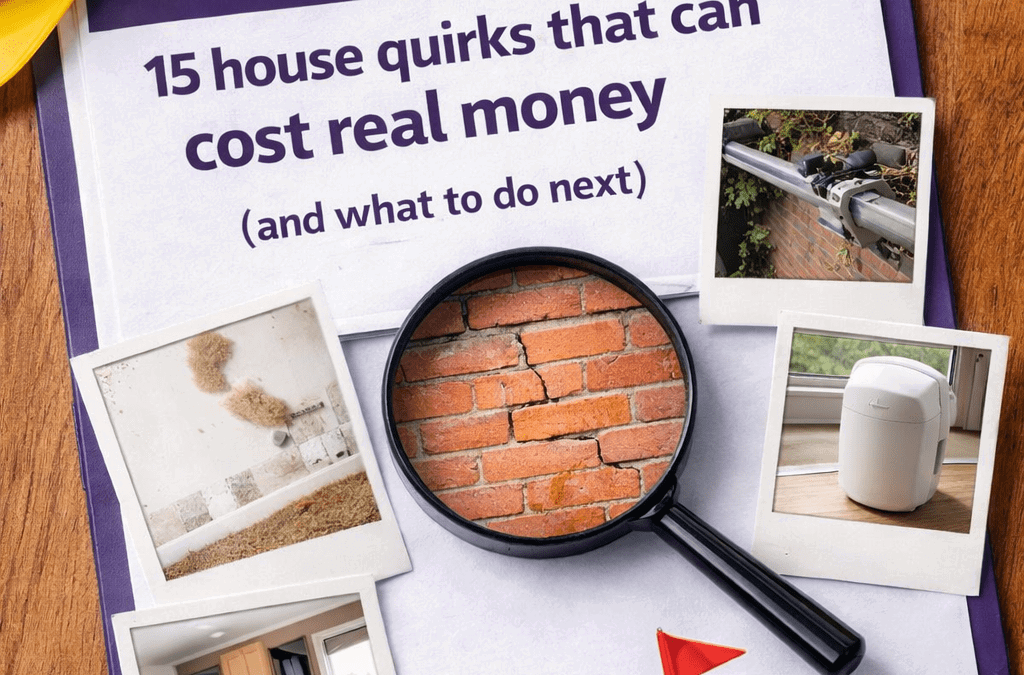
The ‘Weird Stuff’ Surveyors See: 15 house quirks that can cost real money (and what to do next)
Houses are full of surprises. Some are harmless. Others are the early warning signs of repairs that can cost far more than people expect.
This post is a light-hearted look at 15 common “quirks” surveyors come across — and the practical next step if you spot them.
Torus Surveyors Ltd operate from our Altrincham (Greater Manchester) head office and our Liverpool (Merseyside) office.
If you’re buying a property and want an informed view of condition and risks, see:
HomeBuyer Reports (RICS Home Survey Level 2)
and
Building Surveys (RICS Home Survey Level 3).
Important note: A survey is a visual, non-intrusive inspection. Surveyors do not “open up” the building fabric or test services like a specialist contractor would.
This article is general information only (not legal advice). If you need tailored guidance, speak to a surveyor:
Contact.
Quick contents
- The “fresh paint perfume”
- Random extractor fans that don’t vent outside
- A dehumidifier “included in the sale”
- The mystery stain that comes back after rain
- Cracks that look like a staircase
- The “bouncy” floorboard trampoline
- A loft hatch that’s blocked (or “doesn’t exist”)
- The roof that’s “fine” but the gutters are jungles
- A cellar that smells like an old pub
- A garage conversion that feels like a fridge
- Multiple layers of flooring like geological strata
- A chimney breast that’s been “removed” (sort of)
- A bathroom fan that triggers the disco lights
- The “new boiler” with no paperwork
- A loft conversion with a ladder that inspires fear
1) The “fresh paint perfume”
Fresh paint isn’t suspicious by itself — but heavy paint smell plus recently repainted patches (especially low down on walls) can sometimes indicate attempts to tidy up staining.
The key is to look for patterns (e.g., repeated patches, matching marks on skirting, or a “tide line” effect).
Next step: If it’s a conventional property, a Level 2 survey can help identify likely causes and whether further investigation is sensible.
2) Random extractor fans that don’t vent outside
A fan that recirculates or vents into a loft void can contribute to condensation and mould. It can also be a sign of DIY alterations.
Next step: Ask where it vents to, check for obvious signs of poor ventilation, and budget for improvements if needed.
3) A dehumidifier “included in the sale”
Sometimes it’s just convenience. Sometimes it’s a clue that a room is regularly damp or poorly ventilated.
If the vendor has one in every room, that’s worth paying attention to.
Next step: Treat it as a prompt to investigate ventilation, heating patterns, and any visible damp-related symptoms.
4) The mystery stain that comes back after rain
Stains that change with weather can point towards rainwater goods, roof coverings, flashings, or external wall defects.
“It only happens in heavy rain” is still a defect — it’s just intermittent.
Next step: Check gutters/downpipes and external wall condition. A survey can help you understand the likely route of moisture ingress and the urgency.
5) Cracks that look like a staircase
Step cracking in brickwork can occur for various reasons, from historic movement to localised issues (including drainage-related problems).
The context matters: crack width, recent changes, location, and associated distortion.
Next step: Don’t panic, but don’t ignore it. A Level 3 survey is often more suitable where movement is a key concern or the property is older/altered.
6) The “bouncy” floorboard trampoline
Springy floors can be simple (loose boards/joists) or more significant (subfloor ventilation issues, moisture, or decay),
particularly in older properties with suspended timber floors.
Next step: Check for ventilation grilles externally (where visible), ask about past damp/rot treatment, and consider whether a more detailed survey is appropriate.
7) A loft hatch that’s blocked (or “doesn’t exist”)
If the loft can’t be accessed safely, it may be recorded as not inspected. Loft voids can contain important clues: insulation levels, ventilation, and roof structure condition.
Next step: If you can (before exchange), arrange safe access or a specialist inspection. If you’re commissioning a survey, make access as easy as possible on the day.
8) The roof that’s “fine” but the gutters are jungles
Gutters full of moss and debris are a common cause of damp staining and deterioration. Even a good roof can cause problems if rainwater isn’t controlled properly.
Next step: Budget for clearing/repairs and check for staining to fascias, soffits, and internal upper walls.
9) A cellar that smells like an old pub
Cellars/basements can be perfectly usable, but odour, staining, and poor ventilation can indicate persistent moisture.
The “musty” smell is often the first complaint.
Next step: Treat basements as higher-risk elements. A Level 3 survey is commonly more appropriate for older property types with cellars.
10) A garage conversion that feels like a fridge
Converted garages often suffer from poor insulation, damp risk, and ventilation issues. Sometimes the conversion is informal or incomplete.
Next step: Ask about approvals and check for signs of cold bridging/condensation. Your solicitor should verify relevant documentation where applicable.
11) Multiple layers of flooring like geological strata
Layering floors (laminate over tile over old vinyl, etc.) can hide unevenness, historic damp staining, or simply create trip hazards and threshold issues.
Next step: Expect some investigative uplift when renovating (subject to permissions/tenure). A survey can flag where floors appear uneven or compromised.
12) A chimney breast that’s been “removed” (sort of)
Removing chimney breasts can be done correctly — but partial removals can sometimes leave inadequate support, cracking, or unusual alterations.
Sometimes you see odd boxing-in or “floating” bits of structure that invite questions.
Next step: If alterations look significant, a Level 3 survey is usually more suitable, and your solicitor should confirm approvals where relevant.
13) A bathroom fan that triggers the disco lights
Odd electrical behaviour (lights dimming, fans pulsing, random tripping) can indicate wiring issues, poor connections, or non-standard DIY alterations.
A survey is not an electrical test, but it can flag visible concerns and recommend appropriate further inspection.
Next step: Where concerns exist, instruct a qualified electrician for testing before exchange (where possible).
14) The “new boiler” with no paperwork
A recently replaced boiler can be positive — but lack of servicing records, installation certificates, or warranties can create delays and uncertainty.
Next step: Treat this as a “documents to request” issue for your solicitor, and arrange specialist checks if advised.
15) A loft conversion with a ladder that inspires fear
Loft conversions are common, but access arrangements, fire safety provisions, and evidence of approvals are frequently misunderstood by buyers.
If the conversion is central to why you’re buying the property, you want clarity early.
Next step: Your solicitor should confirm relevant consents/certification. A more detailed survey may be appropriate depending on age, complexity and visible condition.
So… which service should you book?
-
Most conventional properties:
RICS Home Survey Level 2 (HomeBuyer Report)
is often suitable where the home appears in reasonable condition and is of standard construction. -
Older, altered, unusual or higher-risk properties:
RICS Home Survey Level 3 (Building Survey)
is the most detailed option and is commonly more appropriate where you want deeper analysis and advice. -
Still deciding? Start with:
RICS Home Surveys.
What to do now (a simple buyer checklist)
- Prioritise safety and urgency: anything that looks serious or uncertain should be investigated before exchange.
- Get the right specialist checks (only where justified): electrics, gas, roofing, drainage, damp/ventilation, etc.
- Get written quotes from appropriately qualified and insured contractors so you can budget realistically.
- Use your solicitor effectively: where the issue is approvals/certification/warranties, ask for documents early.
- Speak to your surveyor if you want the findings translated into clear priorities.
If you’d like to book a survey or discuss which level is appropriate for your property, contact us here:
Contact Torus Surveyors.
Need a valuation instead (or as well)?
If you require an independent valuation for a specific purpose, see:
Home Valuations.
Note: This blog is for general information only. It is not legal advice.
A survey is a visual inspection and does not include specialist testing. Always read your full report and follow any recommendations for further investigation before making a legal commitment to purchase.